Tuesday, August 5, 2008

Greenwich &c

The trip to Greenwich was, unfortunately, a bit truncated - the friend I was going with ended up needing to do an errand for another friend of his that took until early afternoon to wrap up - yet still nice. Stood on the longitudinal Meridian line, poked around the Royal Observatory, got to walk underneath the Thames, got to walk around Canary Warf - lots of fancy new buildings there, starkly contrasting the old Roman-esque around the Tower and the Greenwich University. Didn't get to see Inigo Jones' Queen's House or Ranger's Park (which has lots of Renaissance portraits).


May go back - time depending. Have gone back to the Tate Modern for my half-day field trip; thoroughly enjoyed. (My theatre department friends: please, let me find a way to tell David Kaye I now like modern art - most.) Still want to spend a day at the Tower itself and so some more museum and art gallery circuiting. For classical music - Wigmore Hall and the Barbican aren't doing any more until September (the sold out Mozart's Requiem at the Barbican was its last for August), but I can still follow around the BBC Proms and catch superb shows (love the Royal Albert Hall).

Trying to expedite obtaining the Olivier/ Gielgud scripts from Manuscripts at the British Library. Should find out shortly - within the hour. Would like very much to look at their Romeo and Juliets and maybe their Merchant of Venices and then use the audio archives to listen to the same plays over the last few years. Then I can compare to what I've seen now and what I've read of Irving's productions from the late 1800s. Hopefully!

Me and Emmanuel finding our way from the Tower to Greenwich:


Sunday, August 3, 2008

Bandwagon

Well, might as well hop on the wagon too. Seems like most everyone abroad has gotten ill or sustained some bodily injury. While for a while the only injury I'd sustained was to my ego, and perhaps my id - research is, well, hard, paradoxically having the ability to excite and sustain you and make you feel impossibly thick and crush you; it can enlighten and baffle (in a way that makes you wonder whether your professors are right to give you As and commend your hard work); but then again life does the same thing to me - well anyway, now I'm burning through a wearying cold, and for about three to four weeks now I've been trying different ways to deal with a hurt ankle. Happened while standing at a Globe performance; had stood before - over three hours for Lear - but something this night made me keep rocking on my feet, stretching my calves and ankles, and well, at some point, something cracked, loudly. Hasn't been the same since - my new super-villain name is the Hobbler, behold as I limp slowly by you, that grimace on my face? pure menace. IB Profin helped for a few days and now an ankle brace is basically keeping my foot attached to the rest of me. When I'm off it for a while it starts to get better but I'm never off it for long enough: mounting St. Paul's earlier this week really did a number on it too. But I'll take a couple days - perhaps while I'm teaching myself Power Point - when I'm home and stay off it.

Reviewed everyone else's blogs a little while ago and very jealous of the pictures: very hard to get a good photo here, for me. I think it's a matter of timing, a few hours each day when it's beautiful and I'm in the British Library. Usually there's a gray overcast - always on the weekends lately - well, clouding the photos, but the biggest problem is the cramped nature of the city: hard to capture a building without getting the corner of another building, a streetlamp, phone booth, passing bus or something; hard to get a statue without a bunch of tourist perched on it like pigeons; and there do seem to be fewer wilder, 'freer' sites like the beaches and bonfires that seem to be on everyone's blog but mine. But I'm slowly accumulating my own good 'slideshow' and hope to really flesh it out when I go to Greenwich tomorrow. Also, oddly, lots of the photos I want to take I can't: insides of buildings like St. Paul's, inside Art Galleries, and the like; or, oddly, of the things that really grip/ disturb/ terrify or enrage me - street performers in the tube, beggars, tourists acting like tourists (they're like random pinballs compelled to smash into each other and the city), the potentially dangerous and irreverant youth, and lunatics (lots of the last two here - run across more waiting for or on the bus at night). But it's a bit awkward taking photos of strangers. Also most of my explorations are alone and I find it hard to hand over my camera to strangers, but - a few days planned with friends - I should get more photos with me - and maybe my bowler hat - in them soon.

Also, while wrapping up research - this phase of it, later thesis paper will require more - will be preparing somewhat for the fall semester, starting my schedule/ planner, doing that whole short list of personal goals (usually do this three times a year - the start of the two semesters and the summer - and usually accomplish about 75% at about 75% capacity, or as well as I would have liked), preparing monologues to audition for the fall shows, getting back into vocal warm ups and such (sadly slacked on those a bit but I can actually feel my body missing them and sometimes still incorporating them - as should be done always - into daily activity, speech: in fact every once in a while when I feel the void pressing in around me, erasing me - or just sad or depressed, though sometimes the sheer mass of people and encountering a sufficient number of angries or crazies here leads to that specific sense of erasure - I often serendipitously find myself humming at first and then maybe singing a little - Sinatra helps - to remind myself that I am here, now; it helps).

Be well, all.

Saturday, August 2, 2008

Adventures, Set Backs, Progress


God, I love a good classical performance - the BBC Prom Beethoven's 5th was wonderful, and cost just 5 pounds (had to stand for this price, of course). Going to see if I can attend Mozart's Requiem at the Barbican Hall tonight, after this afternoon's Regent Park production of Romeo and Juliet, which I need to see one last time, and this being my last chance, the last performance - and it looks like it's going to rain and they don't perform when it rains, so hopefully it doesn't rain!

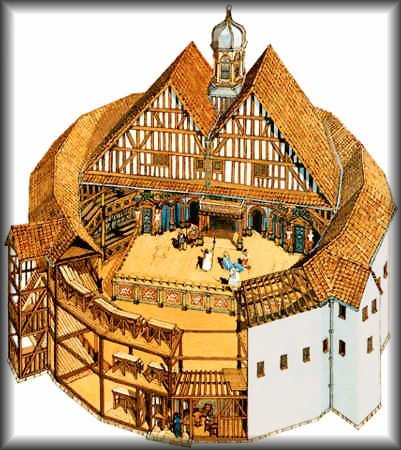
The interview with the Globe's Master of Text largely went wonderful. It's amazing how those first few simple questions are so necessary - "Please tell me a little about yourself," "Please tell me how you came to be involved here," etc. - questions like these really seem to relax the person being interviewed. And a hearty beforehand thanks helps too. Okay, so the Master of Text, as I found, doesn't really have a big hand in altering the texts, but functions more as what I understand to be a cross between a dramaturg and voice coach - he or she helps the actors understand and embody the text, and whereas the director functions as the eye, the Master of Text functions as the ear, though the director still controls the multiple meanings of the word "vision" in the production. So my prepared list of questions may or may not have been ideal - there was some off the cuff improv, as there always is and must be in interviews, but the answers I was getting kept bringing me back to my questions, hinting that they might be fruitful after all, so I asked those - and yes, fruitful, but in a tricky way, because the MoT doesn't have the first-hand knowledge/ reasoning behind the choices to alter the scripts but certainly does have a good second hand knowledge - but, indeed, this may have been better because we were able to discuss a little of each production. And I of course got an insight into behind the scenes at the Globe, which, if I can't directly translate into my project, will still always be endlessly useful and amusing to me - the gentleman I interviewed, a very kind and helpful man, even showed me - quickly, and not quite going in, of course - the tiring house and the green room!

And I've now got 3 Irving scripts with all alterations and have much, much better system, if time remains, to map out the other 4 he has (offhand I think there are only 7 Lyceum Acting Editions of Irving's productions of Shakespeare's plays). Turns out the best, simplest way to transcribe is - if you can find the right website - to download the scripts in word and then mark or highlight or whatnot the changes. I remember my first day tackling the scripts actually spending nearly the whole day typing out Romeo and Juliet - only got about half way - when I figured that I needed a better way - at this time too I was debating about how much punctuation mattered to my project - it does matter generally, but not as much here I've decided - then I tried just typing out the cuts and transpositions specifically, but still that took a lot of time: the beauty of the whole script the way I'm doing it now is I can look when I like easily at what's been altered, just looking for the highlighted bits.

In Humanities One at the British Library - the room where most of my archival research has been done - doesn't have the scripts of Olivier and Gielgud, but Manuscripts may - I spoke with the man at Enquiries on Thursday and he's going to pass on my enquiry to a specialist in the building - hopefully I'll hear back soon, like by early Monday would be nice! If I can look at at least two scripts from each - preferably from the same decade - I think I'll have a sense of what's going on. Then I can do all that fleshing out/ sorting through criticism, autobiographies, letters and such.

It's odd, I mean I'm only going to have essentially a few snapshots, but I now have this sense that maybe, within my lifetime, I might actually obtain a good knowledge of the entire history of Shakespearean staging, and all related topics - acting and staging styles, changes in thought, society, criticism, &c - the list actually is pretty big - and absolutely, my experience here is going to support my passion and career in other endless ways - I've seen interesting ways of handling what's called colorblind Shakespeare, am ever so slowly formulating ideas on how a production works or doesn't, am seeing how even a great production can be reductive (crushing a play into a single theme), am starting to grapple with what some of the greatest directors and scholars of recent years believe the future of production necessary to be and seen some abortive attempts of others to apply these theories . . . SO, SO MUCH.

Other hopefully minor setbacks . . . had hoped to go to the Globe Research Center for a few days and look at the scripts of the current productions and maybe some director or actor notes - heard they kept such in their archives - and applied to visit well in advance as you're supposed to but got a - very polite - email saying that current production info is kept off the shelf until the season closes. Unfortunate!

SO, trying quickly to figure out how best to organize the remainder of my time, determining what's only here and what I'll still have access to in the U.S. Lots of the supporting evidence - autobiographies, etc. - we have in the Dimond Library actually so I think I'll just sample some more of that here for my presentation and then return to them at Dimond later when I'm writing my thesis. I think primarily what I should focus on is scripts and maybe a few essays and texts on my subject, humor . . . perhaps I'll still try to visit the Globe Research Center for something, or - well, at least - I definitely want to visit the Globe Education and Exhibition Center, which may not be directly relevant but is a MUST, there's lots there otherwise very fun and useful. Also want to sample the audio archives at the British Library - they have lots of productions recorded on CD - perhaps focussing on one play and it's productions for the last few years.

ANYWAY.

Visited St. Paul's Cathedral yesterday. A beautiful place, really magnificent. Climbed all the way to the top - 500 + steps, sometimes very steep and with very narrow, short hallways, little more than low tunnels to shimmy up and got some wonderful photographs. Couldn't take any inside but got lots of outside. Whispering Gallery nice, Stone Gallery pretty high up, Golden Gallery - at the top - very narrow and with the railing surprisingly, frighteningly low (probably actually belly level but still, that high up there should maybe be more separating you and the hundreds of feet drop to the ground?). Really a nice journey.

Outside, before going up, sat in Paternoster Square and sipped an iced coffee and read while listening to a live jazz band set up in the square - very good band, played some Frankie Blue-Eyes and even, to my great delight, a wonderful rendering of the main theme of "Aristocats."

"Oh, everybody wants to be a cat, because a cat's the only cat who knows where it's at . . ."

(And I just love Sinatra too, I hope when I take Musical Theatre this fall and I learn a little about, you know, how to sing, I'll be able to belt his songs out whenever I feel like it, which is often whenever I'm in a good mood.)

Monday I've just got to take off from the research - maybe I'll add next Saturday to replace - because a very good friend I've made here - Emmanuel, from Sierra Leonne - is leaving later in the week and he's wanted to join me for my Greenwich trip but is usually busy on the weekends so we're going to go Monday. Looking forward to it!

Going to be a good show week too. Revenger's Tragedy at the National, a highly physical abbreviated Grotowsky influenced Macbeth (outside the National), Wives again at the Globe. Yay! (I feel most calm, most excited, most at home in the theatres.)

**Later entry, Did get to see Regent's Park Romeo and Juliet again today, in the afternoon (and in daylight), and happily marked the heck out of my script; got even those spliced scenes that I thought'd be too tricky. Failed to see Mozart's Requiem at the Barbican - alack, sold out! Place seems very posh, too posh - meaning pricey. Might be able to see an inexpensive performance of something or other at Wigmore Hall in the morning: must hunt online to confirm info. Oi, wish I could add on another two weeks (or years) to my project, just starting to really feel at home + get a sense of how to do this sort of thing effectively, moving around barriers like water or crashing through them like a Juggernaut. Rarely ever got lost anymore, in fact am asked for - and able to provide - directions most everyday! (Easiest are the tube questions, next streets - it seems others are a bit confused by the lack of street signs too -, lastly bus routes - have been using the bus occasionally for a little over a week but the routes aren't in my mental map yet.)

Monday, July 28, 2008

Oi, no!

Ack, mid-way, mid-way! Looking forward to home/ don't want to come home . . . if it were even remotely possible for me to come to Grad School in London . . . I'll probably be just as happy at most any of the Universities in the U.S. . . .

?

Met with my mentor again today and am very happy to have further refined my focus to how alterations to text affect humor within the plays - how humor functions and how alterations affect this function. This choice has been of course shaped by what I've read and seen - Irving cuts out nearly all of the low humor within his plays, especially that spoken by the women (though in Romeo and Juliet Mercutio is practically castrated) and, as in my earlier discussions of Romeo and Juliet and Merry Wives of Windsor (and other plays) note, humor is altered much in modern productions through cuts too - though the bawdy bits usually remain, often for the "cheap laugh" they induce - sometimes bits even being added.

Very happy too to say that Prof. McDonald (my advisor here) arranged for a meeting between myself and the Master of Text at the Globe Theatre - which happens tomorrow evening! Very excited and have a good list of questions of which I'll probably be lucky to get halfway through - but better to have too many questions than too few!

Will be adding on a day or two of the Irving studies - just want to look at a couple more scripts - then jumping ahead to Olivier/ Gielgud. Will be trying too to figure out what is accessible at UNH's library and what's only available here - have time before I need to write my Senior Thesis - and for my IROP presentation I believe I'll have a solid thesis/ supporting evidence anyway, and either way definitely want to use my time here focussing on what's only available here.

Walked around lots and lots this weekend, Saturday mostly to/ from/ around a place called Portabella Market, in some ways like an outdoor fleamarket but generally really neat. Bought - perhaps shouldn't have, but did - a spiffy bowler hat - photos to come perhaps but if the hat's as good a quality as I hope it is most of you will eventually see me in it!

Also discovered recently the existence of BBC Proms - or concerts. Hope to catch a few of these - very inexpensive and, from what I hear, very good. Beethoven's 5th Symphony's going on tonight - I think I'll try to catch it!

Oi, oi, oi! Not going to be able to go everywhere I want to go here - not enough time left! But some definites - Greenwich, the Tower, and St. Paul's. I really also want to go back to at least one place for say half a day - the Tate Modern.

Well, hope everyone is well!

Thursday, July 24, 2008

Regent's Park Productions

Been very disappointed with the Shakespeare production's at Regent's Park, though going, of course, has been a learning experience.

As mentioned, I saw Twelfth Night there recently; and last night I saw Romeo and Juliet. Both under the same artistic director, Timothy Shearer. Directorial vision "overlaps"?

I think the director must recently have quit smoking. Both productions have random cigarette smoking throughout - often negatively affecting character or perhaps sometimes done just to "inject" comedy into what I can only suspect was considered a "dead" scene.

Romeo, in my view, is not a smoker, no matter how "updated" his character - his person, his costume, his haircut. To add a second Friar to Friar Laurence's first scene, to split (though not evenly) the dialogue between the two, to have them sit on fold-out chairs just to smoke while discussing the uses of herbs . . . it's just not comedy, not needed. Preachers smoking? Fine, I get it; and a portion of the audience did laugh. But there's just something potent about that scene, the Friar seeming to meditate on power, his power, with his knowledge of the killing/ healing properties of herbs, which connects somehow - one can argue about the ways - to his trying to alter the violent state of Verona by conceding to wed Romeo and Juliet . . . and it's lost for a cheap gag.

Many other textual alterations to this production and, though I didn't care for it, I will try to go back to refresh myself as to which ones - still a bit tricky catching all alterations in a live performance, I think I basically would have needed to have been off-book for all the plays being staged and all the Quarto/ Folio variants to have done this exactingly, but I do catch lots (except with, for some reason, Lear). I thought about but rejected the idea of recording the performances; conscience preventing me; bringing scripts I tried but whether standing at the Globe or sitting anywhere there's never enough elbow room to have a script open and a pencil in hand. But I think with this R & J if I can go back - there's only one or two more showings - I'll sit on the grass bank and do what I can.

The scenes after Romeo's banishment, between Romeo and the Friar and between Juliet and the Nurse, were chopped up and mixed together, which might have worked if the production were better; the end was cut to pieces; Benvolio - here, he - gave Romeo the news of Juliet's death and the Friar learnt of his letter not arriving and then Romeo was at the tomb; he gave a few lines, drank his poison; Juliet woke and said "I do remember well where I should be"; Romeo did his "O true apothecary . . . thus I die with a kiss"; they kissed; he collapses, dies; Juliet "drunk up all?"; shoots herself in the head and then the whole cast comes out and stares frozen at the audience while the Prince gives a few lines. Other changes too but that's all I'll write about for now. It seemed that basically the production was going for the DiCapprio/ Danes Luhrmann film production effect of enhancing that moment so Juliet and Romeo realize what had happened/ their fate together, but it was oh so lost/ bungled. Going back I'll have better documentary proof of the exact changes - though the post banishment scenes would be harder because of the need to flip through pages instead of just following along with a pencil. Moments like this a "jist" is probably best to convey.

Monday, July 21, 2008

Pictures


On the way to Stratford, a street from the village, a view (pleasantly restricted) of the Avon, and the Big Ben clock.

Pilgrimage &c

Now I've fallen slack with the updates, oi! Impossible to go back and reconstruct all, so some highlights . . .

I did get to interview the director of the Ovo production of Twelfth Night at the Bridewell Theatre, though technological difficulties did their darndest to disrupt the process throughout - first, unable to access internet/ email made it so I wasn't aware of the appointed time until two hours prior and hence wasn't as prepared as I would have liked to have been (though still somewhat prepared and I've had luck in my life with "winging" certain things, here too). I was able to record the interview but then somehow lost the file when attempting to upload later - very late too - that night, probably pushed a wrong button in my sleepy brain-fog state of mind. But fortunately I've been able to largely reconstruct the interview based on my written list of questions and memory, and even some bits from the program, which were gone over in the discussion. So, no direct quotes but jists instead. I also have a script of the production to study.

The production was wonderful - a few flaws but genuinely delightful - a musical version of Twelfth Night. There is something that an amateur - or at least a small - company can bring to a performance that polish sometimes loses - heart, passion, fire. What was very interesting here is that - for anyone familiar with the play - they cut the lines at the end about Malvolio having a suit against the person who holds Viola/ Cesario's clothes but still managed to keep him a potent threat at the end of the play. All the characters came out at the end for a dance number - the production, set in the twenties, used period musical numbers rather than original music - and Malvolio danced, sulking, angry, ominous, without smiling, without singing along with the rest, and there was this bit where the company formed two lines and he was at the head of one, really clouding the celebration. Very neat. Other notable elements to this production but this most striking. A really great fun show, very vaudevilian and some shoot from the hip improv, a master of ceremonies opening the show and occasionally interjecting. He introduced the setting and I most loved how he established the "dancing twins," Viola and Sebastian, who of course looked nothing alike - "here they are, as alike as . . . two cheeks from one bottom!" Lots of fun gags like this, not worn at all, what Peter Brook might label as "Rough Theatre." Some of the songs were powerfully situated - the closing of the first act, after Malvolio's been duped with the letter, has him come out with a mannequin draped with one of Olivia's dresses and he sings, pitifully, humorously, "I want to be loved by you." Some technical difficulties led to humor too - a roof leaking for real onto an imagined deck of a ship during intermission led me to josh with the MoC - who was mopping - "swabbing the deck, eh?" Anyway lots of fun memories from this show.

Twelfth Night at Regent's Park not so much fun - major alterations were the usual "shipwreck" moved to open instead of "If music be the food of love" and updating the "we three" songs to more recognizable bawdy bits with lots of reference to male and female parts and such, but here serving little. Hard to describe how this show failed, still thinking about it . . . partly an inconsistency of style as opposed to what could have been a powerful juxtaposition of styles, if that makes sense at all.

Merry Wives at the Globe was simply delightful. I honestly didn't like that play much in reading, though a bit more fun acting Falstaff in Interpretations of Shakespeare (a theatre class) but here it was brought to life. I've got to go back, oddly I caught more alterations with this show which I hadn't really meant to focus on than with any other . . . a subplot gone (the tricking of the tavern host), pretty sure the character of Bardolph entirely deleted, a bit where a schoolmaster teaches a young child latin meant to be funny but perhaps awkward for a modern audience to hear a child say or percieve as funny "whorum, harem" and the like. Oddly the line of the priest near the end saying he'll look after the childrens' parts (for the staged tricking of Falstaff) perhaps got something like the laugh that would've been in that earlier scene. So, no one loses anything, no property, no job, no children saying anything filthy - a sanitization to bring out the farce, make it more of the sitcom the program advertized it as. Still, very funny!

AND! AND! I made my pilgrimage to Stratford-upon-Avon, a two day trip (one full day really). The loveliest place in the world, I think. I got to see Shakespeare's birthplace and his grave - or the stone floor above it - and well it really did end up feeling like a pilgrimage. The birthplace especially crafted this story through its museum like peices and walk through as if Shakespeare's life were a logical loop leading him from Stratford and back to Stratford again. Some of the guides were funny . . . one saying that after the Globe burnt down (I think in 1616 but I'd have to check) it was never rebuilt until recently of course (not true) and another saying how one day Shakespeare got this idea, this really startling and powerful idea, that he'd go to London and start a theatre . . . (so not true, he became a part of a theatre already in the process of establishing itself) . . . but I bit my tongue and didn't even raise an eyebrow and let everyone bask in the miracle myth. I got to see two Royal Shakespeare Company productions, Merchant of Venice (not so good) and Taming of the Shrew (superb). The first maybe failed because the director - I've learned - doesn't believe in characterization with Shakespeare or even blocking, thinking these interfere with an organic or more "natural" production, which would somehow be trueer and more alive . . . not so. Shrew took the it's entirely a play that exposes misogyny and that's all it's about tack, but still a very good show, made the link between prostitution as the first and last bastion of misogyny (the program had images of the sex industry from SoHo here in London, which was also reflected in part of the set) and what was especially surprising was the juxtaposition of styles which worked here, the commedia del arte farce of most scenes against the breaking of Katherina, which was done very darkly. The only thing is that I think "the breaking" peaked too soon with a very powerful image . . . there's this bit where Grumio (a servant) torments her with the idea of food (she hasn't eaten) and she finally says something like "then the mustard or the beef or what you will" and here, on the line "what you will" she, well, "makes herself available" for Grumio, who, just as broken as she (he was the horse Petruccio rode in on) rejects the offer, shown his own pain. Maybe because this bit was so powerful some of the later scenes had this sort of floating, no where left to go energy. I did stay for the talk back here and got to ask about alterations to text or "how performance choices might necessitate alterations" and though I had this vague sense that the first half was a bit light I'd only caught a few changes and anway, most of the cuts were made for the practical reason of the first half otherwise running 150mns and unfortunately the rest of the answer turned to an error on my part: I'd thought a few lines had been reassigned from Petr. to Hortensio but apparently one of the Folios has the lines as Hortensio's and that was the text they'd used - hard with their being so many texts with some of these plays. But anway a powerful production that I'll be thinking about for a long, long time.

This week will hopefully wrap up the Irving studies, though I may perhaps need to return briefly to get some quotes to flesh out some ideas. Unfortunately maybe I took the approach of reading the criticism before the scripts and most of what I have from there is about acting styles, some stuff relatable to feminist theory, and lots of stuff on scenery that's very interesting that I'd hoped to relate to alterations to text but most of the alterations I've run across - though I haven't worked through much yet here - is the almost re-writing of female characters into so-called "proper" ladies. But I still have more to go and at worst I can save this by contextualization, taking what I've read in the light of the works of other, more moder scholars. I think the Olivier/ Gielgud studies should go much more smoothly having begun to learn how best to approach. Time wise it would much easier if copies weren't so expensive - it's actually about an American dollar per page! - making it so I have to type out everything that I think is relevant - and of course it's not always easy to know what's relevant, or anyway what might prove relevant. But I think anyway with all the preparation I've done for this project the purpose is partly to train me to do such work again, better - in all senses a learning experience.

Explored around Westminster (yes I saw the Big Ben clock!), St. John's Smith Square (architecturally serene), St. James Park and Buckingham Palace . . . lovely places. And my sense of the city keeps improving . . .